Una de las objeciones más comunes a la divinidad de Cristo parece sencilla:“Si Jesús es Dios, ¿por qué oró?”Al principio, eso puede sonar convincente.Porque mucha gente asume que la oración significa automáticamente:
Jesús es menos que Dios
Jesús es solo un profeta
Jesús es solo un siervo que pide ayuda a alguien superior.
Pero esta objeción solo funciona si se malinterpreta lo que realmente creen los cristianos.El cristianismo no enseña que Jesús sea el Padre.El cristianismo enseña que:
El Padre es Dios
El Hijo es Dios
El Espíritu Santo es Dios
Pero el Padre no es el Hijo, y el Hijo no es el Espíritu Santo.Así pues, cuando Jesús ora, no está «orando a sí mismo». Habla como Hijo al Padre dentro de la relación real revelada en la Trinidad. Juan 11 es uno de los pasajes más claros para comprobarlo. Eso significa que la verdadera pregunta no es:¿Jesús oró?Por supuesto que sí.La verdadera pregunta es:¿Qué reveló su oración?Y en Juan 11, se revela algo mucho más importante de lo que mucha gente percibe.
La oración de Jesús antes de la resurrección de Lázaro fue pronunciada públicamente para que la multitud comprendiera correctamente el milagro.
Jesús oró antes de resucitar a Lázaro, pero ¿por qué?
Comencemos con las palabras en sí.
Juan 11:41–42 (NKJV)
«Padre, te doy gracias porque me has escuchado. Y sé que siempre me escuchas, pero dije esto por la gente que estaba aquí, para que crean que tú me enviaste.»Esa afirmación es tendenciosa.Jesús nos explica exactamente por qué habló en voz alta.No porque estuviera inseguro.No porque le faltara poder.No porque estuviera pidiendo ayuda como lo haría una criatura indefensa.Dice que habló de esa manera por la gente que estaba allí presente .Eso significa que la oración fue pública a propósito.Su propósito era enseñar a la multitud a comprender el milagro que estaban a punto de presenciar. La oración no negaba el poder de Cristo, sino que era una revelación pública de su unión con el Padre y de la aprobación que este le otorgaba. Así que, incluso antes de que veamos a Lázaro salir, Jesús ya nos dice lo que se supone que demuestra el milagro.
La oración muestra que Jesús no es el Padre.
Esto es importante de inmediato.Jesús dice:
Juan 11:41
«Padre…»Eso significa que Jesús no es el Padre.Esto debería ser obvio, pero es importante.La afirmación cristiana no es que el Padre se convirtiera en el Hijo.La afirmación cristiana no es que una persona intercambie roles.El Hijo es distinto del Padre.Así pues, cuando Jesús ora, la oración demuestra distinción personal , no inferioridad de esencia. Muchas objeciones contra la divinidad de Cristo atacan, de hecho, una postura que los cristianos no comparten. En otras palabras:Que Jesús ore no prueba que no sea Dios.Prueba que no es el Padre.Eso es muy diferente.
La oración también muestra una unión perfecta con el Padre.
Ahora fíjate en la siguiente línea.
Juan 11:42
“Y sé que siempre me escuchas…”Siempre.Esa es una afirmación asombrosa.Jesús no dice:
“A veces me oyes”
“Espero que me escuches”
“Estoy tratando de persuadirte”
Él dice:Siempre me escuchas.¿Por qué?Porque el Padre y el Hijo nunca están descoordinados.El Hijo siempre hace lo que agrada al Padre.El Padre siempre aprueba al Hijo.Nunca hay conflicto entre ellos.Por eso el milagro es tan importante.Jesús no actúa independientemente del Padre, ni en contra de Él. La oración muestra su perfecta unión, y el milagro se convierte en el “Amén” público del Padre a todo lo que el Hijo afirma sobre sí mismo. Así no es como las Escrituras hablan de una simple criatura.
El milagro de Lázaro confirma lo que Jesús dijo anteriormente.
Aquí es donde el contexto se vuelve crucial.Antes de que Jesús sacara a Lázaro de la tumba, le dijo algo impactante a Marta.
Juan 11:23–26 (NKJV)
«Tu hermano resucitará.» … «Yo soy la resurrección y la vida. El que cree en mí, aunque muera, vivirá. Y todo aquel que vive y cree en mí no morirá jamás. ¿Crees esto?»Esa afirmación es enorme.Jesús no se limita a decir:
“Puedo enseñar sobre la resurrección”
“Puedo rezar por la resurrección”
“Puedo indicarte quién da la vida”
Él dice:“Yo soy la resurrección y la vida.”La oración previa a la resurrección de Lázaro debe leerse junto con esta declaración anterior. El milagro es la confirmación visible del Padre de la afirmación del Hijo. Eso significa que cuando Jesús ora y luego resucita a Lázaro, el mensaje no es simplemente:“Dios respondió a un profeta.”El mensaje es:“El Padre confirma que el Hijo es verdaderamente la resurrección y la vida.”Eso lo cambia todo.
Antes de resucitar a Lázaro, Jesús ya había declarado la verdad que el milagro confirmaría: «Yo soy la resurrección y la vida».
Jesús resucita a Lázaro por su propia orden
Después de la oración, Jesús no realiza ningún ritual.Él no invoca una autoridad superior como si el poder perteneciera a otro lugar.Él dice:
Juan 11:43 (NKJV)
“¡Lázaro, sal fuera!”Y Lázaro sale.Ese es uno de los detalles más importantes del capítulo.Jesús no se queda allí impotente esperando a que algo suceda.Él da órdenes al muerto.Y el muerto obedece.Esa es la autoridad divina sobre la muerte.La oración preparó a la multitud para comprender correctamente el milagro. Luego, el milagro mismo demostró que Jesús posee poder vivificante en su propia persona. Una criatura puede ser utilizada por Dios.Pero aquí Jesús está haciendo algo aún mayor:
He is speaking to death itself as Master.
John 5 Says the Same Thing Even More Directly
The raising of Lazarus is not an isolated passage.
Jesus says similar things earlier in John’s Gospel.
John 5:21 (NKJV)
“For as the Father raises the dead and gives life to them, even so the Son gives life to whom He will.”
That is one of the clearest statements in the New Testament.
The Father raises the dead.
The Son raises the dead.
The Father gives life.
The Son gives life.
And notice the wording:
“to whom He will”
That is sovereign language.
Jesus is not describing Himself as a passive instrument only.
He is speaking as one who shares in the divine prerogative of giving life.
Jesus Says the Dead Will Hear His Voice
It gets even stronger.
John 5:25 (NKJV)
“Most assuredly, I say to you, the hour is coming, and now is, when the dead will hear the voice of the Son of God; and those who hear will live.”
Then a few verses later:
John 5:28–29 (NKJV)
“the hour is coming in which all who are in the graves will hear His voice and come forth…”
That means Jesus claims that the dead will rise at His voice.
Not merely because He is nearby.
Not merely because He announces something someone else is doing.
His voice is the voice that summons the dead.
That is why John 11 and John 5 are connected. Lazarus is not a random miracle. He is a preview of what Jesus says He will do universally at the hour of resurrection.
So when people say Jesus praying proves He is not God, they are ignoring that the same Jesus says the dead in their graves will hear His voice and come out.
That is not a creature’s claim.
Jesus does not merely speak about resurrection. He says the dead will hear His voice and come forth.
John 6 Says Jesus Will Raise Believers on the Last Day
The same truth appears again in John 6.
John 6:39–40 (NKJV)
“This is the will of the Father who sent Me, that of all He has given Me I should lose nothing, but should raise it up at the last day.And this is the will of Him who sent Me, that everyone who sees the Son and believes in Him may have everlasting life; and I will raise him up at the last day.”
Then again:
John 6:44 (NKJV)
“I will raise him up at the last day.”
John 6:54 (NKJV)
“I will raise him up at the last day.”
Jesus says this again and again.
He does not say merely:
“God will do something wonderful on that day.”
He says:
“I will raise him up.”
This shows that resurrection authority belongs to Christ personally, not symbolically.
So John 11 is not an isolated miracle chapter.
It fits a much larger pattern in John’s Gospel.
Jesus Also Says He Is the Truth and the Life
This is another reason the prayer cannot be used against Christ’s deity.
John 14:6 (NKJV)
“I am the way, the truth, and the life.”
Again, Jesus does not merely say He tells the truth.
He says He is the truth.
He does not merely say He shows the way to life.
He says He is the life.
This links to John 11 because the same Jesus who prays to the Father also claims titles and functions that belong uniquely to God.
So prayer and deity are not opposites here.
The prayer reveals relationship.
The titles reveal identity.
Both matter.
Revelation Says Jesus Holds the Keys of Death and Hades
Then the risen Christ speaks in Revelation.
Revelation 1:17–18 (NKJV)
“Do not be afraid; I am the First and the Last.I am He who lives, and was dead, and behold, I am alive forevermore. Amen.And I have the keys of Hades and of Death.”
This is breathtaking.
Jesus claims:
“the First and the Last”
everlasting life after death
authority over Hades
authority over Death
This is the same Christ who in John claims to be the resurrection and the life.
So the One who prays in John 11 is also the One who later declares that He holds the keys of death itself.
That means prayer did not reveal weakness.
It revealed the Son’s communion with the Father before demonstrating power over the grave.
So Why Did Jesus Pray?
Let us state it simply.
Jesus prayed in John 11:
1. To show He is distinct from the Father
He is the Son, not the Father.
2. To show the Father always hears Him
They are in perfect union.
3. To show the miracle is public confirmation
The raising of Lazarus is the Father’s witness to the Son.
4. To confirm His earlier claim
He really is the resurrection and the life.
5. To teach the crowd how to interpret what they were about to see
The miracle is not magic. It is revelation.
That is why the prayer helps rather than hurts the doctrine of Christ’s deity. The Father’s public approval of the Son’s words proves the Son is exactly who He claims to be.
If Jesus Were Only a Creature, This Scene Would Be Blasphemous
Think about it.
If Jesus were only a created being, then why would the Father publicly confirm these claims?
Why would the Father back someone who says:
“I am the resurrection and the life”
“The dead will hear My voice”
“I will raise him up at the last day”
“I am the truth”
“I have the keys of death”
If a mere creature spoke like that and the Father publicly endorsed it, that would not be humility.
That would be blasphemy.
But it is not blasphemy.
Because Jesus is not a creature only.
He is the divine Son.
That is the force of the chapter.
Final Thoughts
Why does Jesus praying prove He is also God?
Porque en Juan 11, Jesús mismo explica que su oración pública fue pronunciada para que la multitud comprendiera el significado del milagro de Lázaro. La oración muestra que Jesús es distinto del Padre, siempre escuchado por Él, perfectamente unido a Él y confirmado públicamente por Él. Luego, el milagro mismo demuestra que Jesús es verdaderamente lo que acababa de afirmar ser: la resurrección y la vida. Al leer esto junto con Juan 5, Juan 6, Juan 14 y Apocalipsis 1, la imagen se vuelve aún más clara. Jesús es aquel cuya voz resucita a los muertos, quien da vida a quien quiere, quien resucita a los creyentes en el último día y quien tiene las llaves de la muerte y del Hades. Por lo tanto, que Jesús ore no prueba que sea inferior a Dios.Esto demuestra algo más importante:El Padre y el Hijo son distintos.El Padre y el Hijo son perfectamente uno en poder y propósito.Y el Hijo realiza las obras que solo le pertenecen a Dios.Eso no supone ningún problema para la doctrina de la divinidad de Cristo.Esa es una de sus demostraciones más claras.
El mismo Jesús que oró ante la tumba de Lázaro declaró más tarde que Él posee las llaves de la muerte y del Hades.
Respuesta rápida
Si Jesús oró, ¿significa eso que no es Dios?
No. Significa que Él es el Hijo hablando con el Padre, no que sea menos que divino.
¿Por qué oró Jesús antes de resucitar a Lázaro?
Dijo que habló en voz alta por el bien de la multitud, para que creyeran que el Padre lo había enviado y comprendieran correctamente el milagro.
¿Qué demostró el milagro?
Demostró que el Padre confirmó públicamente la afirmación del Hijo de ser la resurrección y la vida.
¿Acaso Jesús afirma tener poderes divinos en otros ámbitos?
Sí. Él dice que los muertos oirán su voz, resucitará a los creyentes en el último día y tiene autoridad sobre la muerte y el Hades.
¿Cuál es la principal conclusión?
La oración de Jesús revela la Trinidad y confirma su identidad divina en lugar de negarla.
Gracias a tu recomendación podré continuar agregando mucho más contenido, las historias incluyen temas de la red de todo, contáctame ante cualquier consulta.
Results for {phrase} ({results_count} of {results_count_total})


 Una pregunta que mucha gente se hace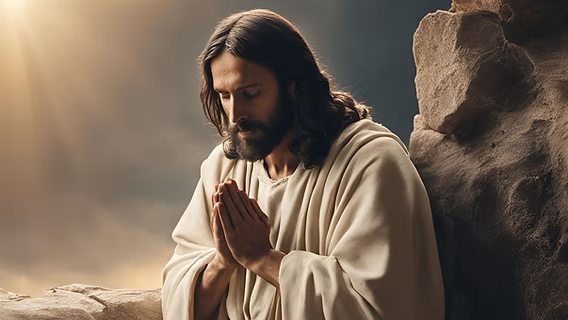
 Jesús oró antes de resucitar a Lázaro, pero ¿por qué?
 La oración muestra que Jesús no es el Padre.
 La oración también muestra una unión perfecta con el Padre.
 El milagro de Lázaro confirma lo que Jesús dijo anteriormente.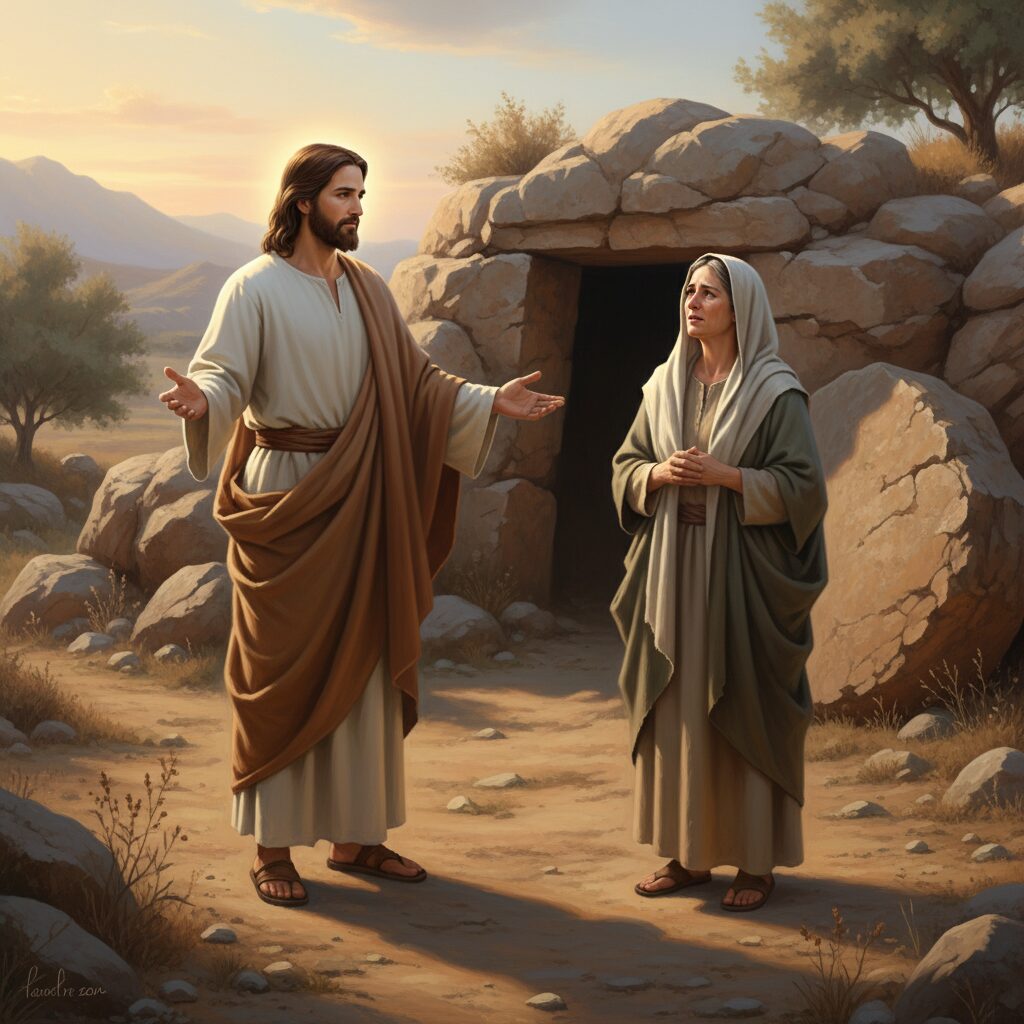
 Jesús resucita a Lázaro por su propia orden
 John 5 Says the Same Thing Even More Directly
 Jesus Says the Dead Will Hear His Voice
 John 6 Says Jesus Will Raise Believers on the Last Day
 Jesus Also Says He Is the Truth and the Life
 Revelation Says Jesus Holds the Keys of Death and Hades
 So Why Did Jesus Pray?
 If Jesus Were Only a Creature, This Scene Would Be Blasphemous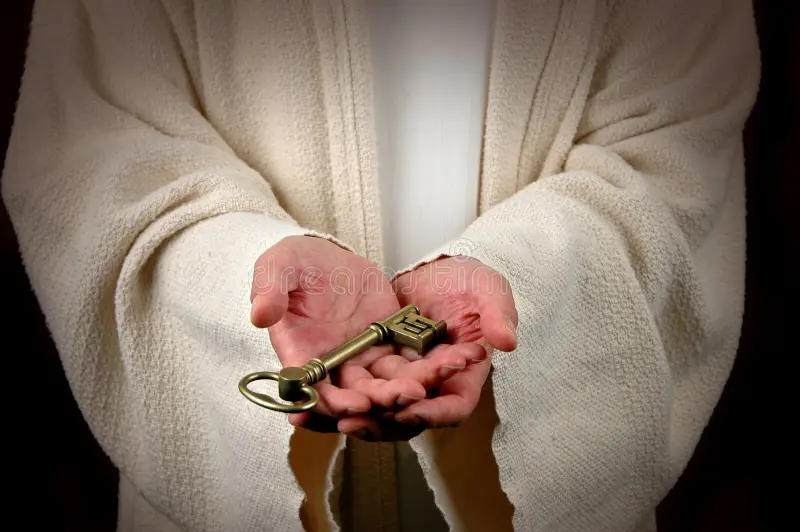


 Spanish
  English
  Russian
